
Wind and Storm Damage Roof Insurance Claims in Durham, NC
Straight-line thunderstorm wind and hurricane-remnant rain damage commercial roofs differently, and pine-debris punctures are a real Durham problem on wooded office campuses. We document each failure point separately so the claim reflects what actually happened.
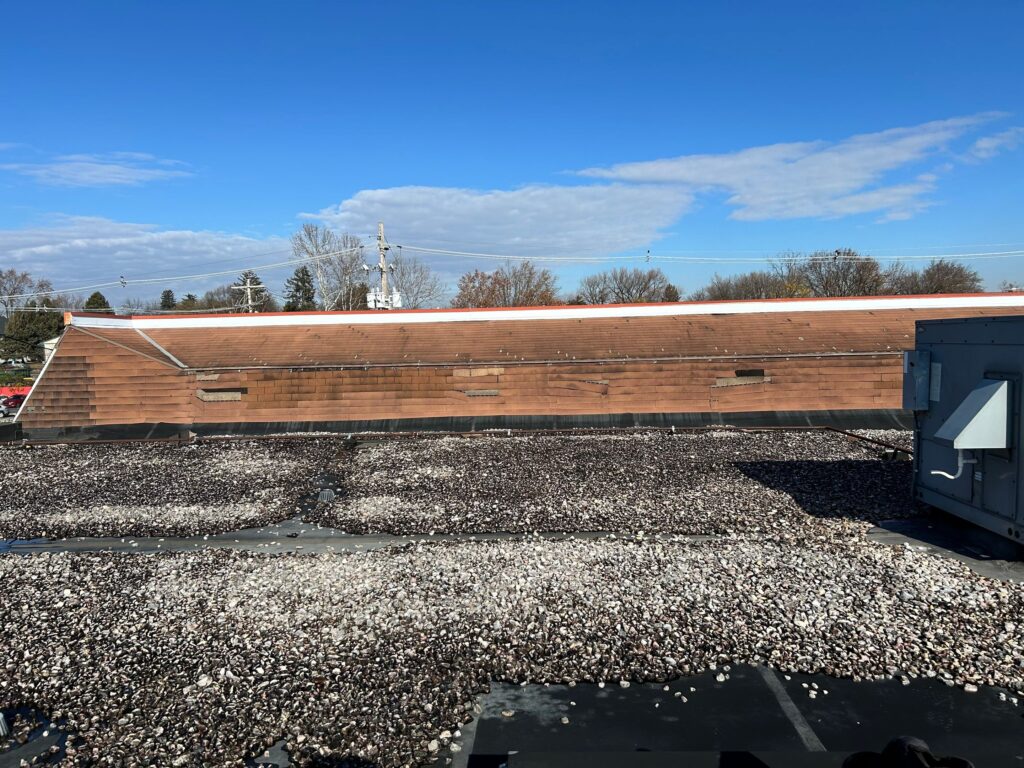
Wind damage is rarely one obvious hole.
Around Research Triangle Park office campuses and the wooded corridors near Treyburn and Duke University, wind damage and debris punctures often show up as several smaller failure points. We document each one instead of only the most visible.
Start ReviewWhat gets documented.
Edge-metal and coping deformation, torn HVAC curb flashing, membrane blow-off at fastener rows, and debris-strike punctures - each recorded individually with photos and measurements.
For hurricane-remnant rain events, we document drainage capacity and ponding separately from wind-specific damage when a single storm produces both.
What owners receive.
A dated wind and storm damage report with photographs, measurements, and a written scope - plus documentation of any emergency dry-in work performed.
Contact UsRelated Roof Paths
Compare the storm-claim path that fits.
Commercial Roof Insurance Claims
The full claims pillar - documentation, adjuster meetings, and complete-scope reporting for Durham commercial roofs.
Hail Damage Insurance Claims
Impact-mapping documentation for the Triangle's spring hail season, the other half of the storm calendar.
Insurance Claim Documentation
The underlying inspection and reporting service behind every wind and storm claim file we build.
Emergency Dry-In Tarping
Temporary weathertight protection while the permanent repair scope is documented and priced.
Services
Wind and storm damage roof insurance claim documentation for commercial buildings across Durham, Research Triangle Park, Chapel Hill, Raleigh, and the greater Triangle commercial corridor.
Wind is the more frequent of the Triangle's two big storm risks, and it shows up in more forms than most owners expect. Severe thunderstorm cells that push through the I-40/I-85 corridor from spring through summer can produce straight-line gusts well past 60 mph, and a handful of times a decade a hurricane's remnant circulation tracks far enough inland to bring sustained wind and heavy rain to Durham directly. Both mechanisms damage commercial roofs, but they don't damage them the same way, and a claim file needs to reflect which one actually happened.
Straight-line wind stresses a roof at its attachment points and its edges first. Parapet edge metal and coping can be pried loose or deformed, membrane at the field can lift and tear at fastener rows, and flashing around rooftop HVAC curbs - common on office and lab buildings across Research Triangle Park - can tear or separate under sustained uplift pressure. We document each failure point individually: the location, the extent, and whether it's consistent with wind-uplift forces or looks like a pre-existing attachment problem the wind simply exposed.
Wind-driven debris is a Durham-specific complication that flatter, more open metros don't deal with as much. Office campuses and business parks built into wooded sites around Treyburn, RTP, and the Duke University corridor sit close to mature pine stands, and a severe thunderstorm or hurricane-remnant wind event regularly brings down limbs onto low-slope roofs. A limb puncture looks straightforward, but we probe and often cut an exploratory opening before closing anything up, because a limb heavy enough to puncture membrane can also crack the steel deck underneath - a structural issue that changes both the repair scope and the claim.
Hurricane-remnant rain events deserve documentation that's distinct from wind damage. When a system like the ones that have tracked through central North Carolina in recent years drops eight to fourteen inches of rain over a day or two, the failure mode shifts from wind stress to overwhelmed drainage. Roof drains and scuppers that handle normal Piedmont rainfall without issue can be undersized for that volume, and marginal flashing details that never leaked under ordinary conditions start taking on water. We document ponding, drain capacity, and flashing condition separately from wind-specific damage when a single storm produces both.
Temporary protection and documentation happen together, not sequentially. When active dry-in is needed - a torn membrane section, displaced edge metal exposing the roof deck - we photograph the original damage before any tarp or temporary patch goes down, then document the mitigation itself. Most commercial policies expect reasonable steps to prevent further loss after a storm, and a claim file that shows both the original damage and the emergency response tends to move through review more smoothly than one that just shows a repaired condition with no before picture.
Meeting the adjuster on the roof matters especially for wind claims, because wind damage is often distributed across several smaller failure points rather than one obvious hole. An adjuster walking the roof alone might catalog the torn flashing at one HVAC curb and miss a second, less obvious tear on the far side of the building, or attribute loosened edge metal to age rather than the storm. Being on the roof to point out each documented location, tied to photographs and measurements taken beforehand, keeps the adjuster's estimate aligned with what actually happened.
We're your roofing contractor, not a public adjuster - we inspect the roof, document wind and storm damage with photos and measurements, and produce a written scope so you and your adjuster are working from an accurate record. We don't file claims, negotiate settlements, or guarantee what a carrier will pay.
Questions Owners Ask
Membrane blow-off at the field or edge, deformed or displaced edge metal and coping, torn flashing at rooftop equipment curbs, and punctures from wind-driven debris - including the pine limbs that come down across wooded Durham office campuses during severe thunderstorms. We document each of these separately, because wind damage often shows up as several smaller, distinct failures rather than one obvious hole.
Debris impact is typically evaluated as part of the same wind or storm event, but the documentation looks a little different - we note the debris source, the puncture location and size, and whether the impact affected the structural deck underneath in addition to the membrane. A limb heavy enough to puncture membrane can also dent or crack a steel deck panel, which changes the repair scope and needs to be documented before anything is closed up.
The mechanism is different, so the evidence is different. Straight-line wind stresses membrane seams and edge attachment, and it leaves physical deformation you can see and measure. Hurricane-remnant rain events - the kind that bring eight or more inches of rain over a day or two as storms track inland from the coast - overwhelm drainage systems and expose marginal flashing and pooling issues that wind alone might never have found. We document both mechanisms separately when a single event produces both kinds of damage.
Yes. Wind damage doesn't always produce an immediate interior leak - displaced edge metal, loosened membrane attachment, or torn flashing at a rooftop unit can sit for weeks before water finds its way in, especially if the next few weeks are dry. Documenting the roof's condition shortly after a wind event, even without an active leak, creates the record you'd need if a leak develops later and the storm date has to be tied to it.
Emergency dry-in work is generally expected after storm damage - most policies require reasonable steps to prevent further loss - and it doesn't undermine a claim as long as the original damage is documented first. We photograph the roof before any temporary repair goes down, then document the tarping itself, so the claim file shows both the original damage and the mitigation steps taken.
Commercial Roofing of Durham
Questions Owners Ask
What counts as wind damage on a commercial roof claim?
Membrane blow-off at the field or edge, deformed or displaced edge metal and coping, torn flashing at rooftop equipment curbs, and punctures from wind-driven debris - including the pine limbs that come down across wooded Durham office campuses during severe thunderstorms. We document each of these separately, because wind damage often shows up as several smaller, distinct failures rather than one obvious hole.
A tree limb punctured our roof during a storm. Is that covered the same way as wind damage?
Debris impact is typically evaluated as part of the same wind or storm event, but the documentation looks a little different - we note the debris source, the puncture location and size, and whether the impact affected the structural deck underneath in addition to the membrane. A limb heavy enough to puncture membrane can also dent or crack a steel deck panel, which changes the repair scope and needs to be documented before anything is closed up.
How is hurricane-remnant rain damage different from straight-line wind damage in a claim?
The mechanism is different, so the evidence is different. Straight-line wind stresses membrane seams and edge attachment, and it leaves physical deformation you can see and measure. Hurricane-remnant rain events - the kind that bring eight or more inches of rain over a day or two as storms track inland from the coast - overwhelm drainage systems and expose marginal flashing and pooling issues that wind alone might never have found. We document both mechanisms separately when a single event produces both kinds of damage.
Our building stayed dry during the storm, but the roof looks different afterward. Should we still document it?
Yes. Wind damage doesn't always produce an immediate interior leak - displaced edge metal, loosened membrane attachment, or torn flashing at a rooftop unit can sit for weeks before water finds its way in, especially if the next few weeks are dry. Documenting the roof's condition shortly after a wind event, even without an active leak, creates the record you'd need if a leak develops later and the storm date has to be tied to it.
Can emergency tarping affect our insurance claim?
Emergency dry-in work is generally expected after storm damage - most policies require reasonable steps to prevent further loss - and it doesn't undermine a claim as long as the original damage is documented first. We photograph the roof before any temporary repair goes down, then document the tarping itself, so the claim file shows both the original damage and the mitigation steps taken.