
Hail Damage Roof Insurance Claims in Durham, NC
Triangle hail can hit one stretch of Durham hard and leave a nearby building untouched, and low-slope commercial roofs rarely show it from the ground. We document impact patterns, soft-metal witness marks, and cause-of-loss evidence before it fades.
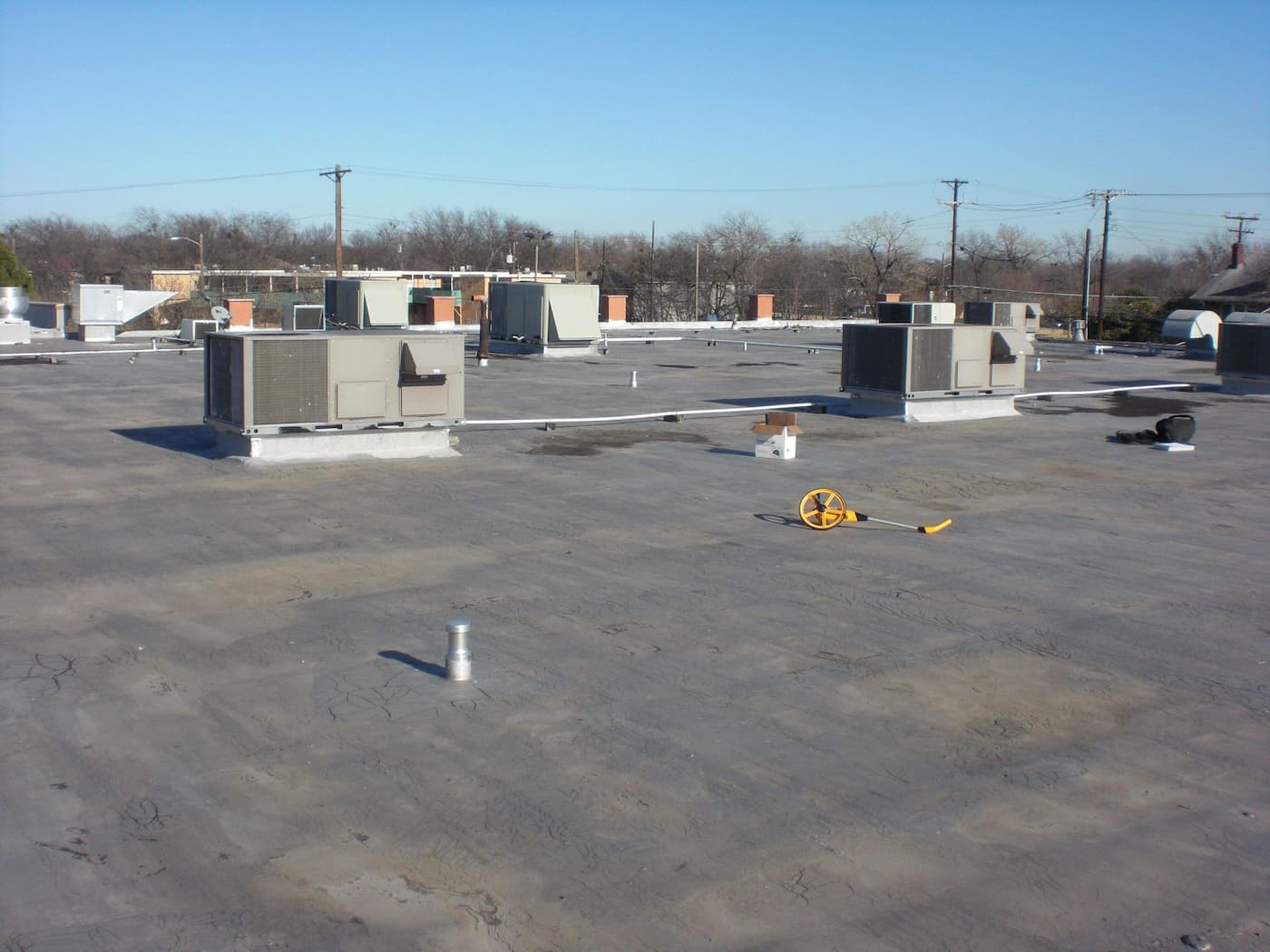
Hail evidence fades fast - documentation shouldn't wait.
Around Research Triangle Park lab campuses and Duke-adjacent office buildings, a low-slope roof can take a full hail event with nobody at ground level noticing. We map impact density across the whole field rather than the section near a known leak.
Start ReviewWhat gets documented.
Full-field impact mapping with measuring references, soft-metal witness marks on curb caps and coping, and membrane-specific evidence - bruising, splitting, or granule loss depending on the roof system.
We note where marks are absent as well as where they're present, because that distribution is part of what makes a hail claim credible to an adjuster.
What owners receive.
A dated hail-impact report with photographs, measurements, and a written scope - built to hand directly to your adjuster.
Contact UsRelated Roof Paths
Compare the storm-claim path that fits.
Commercial Roof Insurance Claims
The full claims pillar - what documentation, adjuster meetings, and complete-scope reporting look like for Durham roofs.
Wind and Storm Damage Claims
Straight-line wind and hurricane-remnant claim documentation, the other half of the Triangle's storm calendar.
Insurance Claim Documentation
The underlying inspection and reporting service behind every hail claim file we build.
Hail Damage Roof Restoration
Once the claim documentation is done, this is the repair or restoration work it supports.
Services
Hail damage roof insurance claim documentation for commercial buildings across Durham, Research Triangle Park, Chapel Hill, Raleigh, and the greater Triangle commercial corridor.
Hail is the Triangle's least predictable commercial roofing risk, and the least visible from the ground. A supercell that rolls through the I-40/I-85 corridor in late April or May can drop pea-size hail over one stretch of Durham and golf-ball-size stone a few miles away, and low-slope roofs at Research Triangle Park lab buildings, Duke-adjacent office parks, and warehouse conversions along the tobacco-district corridor take that impact with nobody at ground level noticing a thing. The first sign is sometimes a leak weeks later; the storm evidence, by then, has already started to fade.
What hail actually does to a commercial roof depends heavily on the membrane. On TPO and PVC single-ply systems, hail impact can bruise the membrane without an immediate tear - a soft depression that weakens the material at that point without opening a hole right away. On EPDM, larger stones can cause visible fracturing or splitting. On modified bitumen, impact dislodges the granule surfacing, exposing the asphalt layer beneath to accelerated UV degradation. On metal panel roofs, dents are usually cosmetic but can compromise coating integrity at the impact point over time. Each of these needs a different documentation approach, and we tailor the inspection to the roof system actually installed.
Soft metals are some of the best corroborating evidence on a hail claim, and they're often overlooked. HVAC curb caps, aluminum coping, pipe boots, and lead flashings register hail impact clearly - dents and dings that are hard to attribute to anything other than hail of a specific approximate size. When membrane damage is subtle or ambiguous, a consistent pattern of soft-metal denting in the same area, matched to a documented storm date, gives an adjuster something unambiguous to work from.
We photograph and measure every impact point with a scale reference in frame, and we map the density and distribution across the roof field, beyond just the worst-looking section. A hail claim that's supported by a full-field impact map reads very differently to an adjuster than one built from a handful of close-up photos of the most obvious damage. We also note where impact marks are absent, because a roof section with no hail marks helps confirm that the marked areas are genuinely storm-related rather than pre-existing surface wear.
Timing matters more with hail than with almost any other storm damage. Impact bruising on membrane and granule loss on modified bitumen both become harder to distinguish from ordinary weathering as time passes and as foot traffic, UV exposure, and additional storms accumulate. We recommend scheduling a documentation inspection as soon as the roof is safe to walk after a hail event that's produced reports in your area, even if you haven't seen a leak yet - the evidence is at its clearest in the days immediately following the storm.
Cumulative hail damage is a real pattern in this market. A Durham commercial roof can take three or four documented hail events across a single spring without any single storm looking severe enough on its own to justify a claim. What accumulates, though, is real: repeated impact stress on the same membrane, granule loss that compounds, soft-metal fatigue. Keeping dated records tied to each event - rather than waiting for one storm to look bad enough - builds a documented history that supports a claim once the cumulative damage reaches the point of needing repair.
We're your roofing contractor, not a public adjuster - we inspect the roof, document hail impact with photos and measurements, and produce a written record so you and your adjuster are working from the same evidence. We don't file claims, negotiate coverage, or guarantee a specific settlement.
Questions Owners Ask
Hail leaves specific, physical marks: circular impact bruising on membrane, cracked or dislodged granules on modified bitumen, and dents or dings on soft metals like HVAC curb caps and coping that a heat-aged roof simply doesn't develop on its own. We photograph and measure those marks with a reference scale in frame, and we note their density and distribution, because a scattered handful of marks reads differently to an adjuster than a field-wide impact pattern consistent with a specific storm.
Usually yes. Low-slope commercial roofs are rarely visible from ground level, and hail damage on TPO, EPDM, or modified bitumen doesn't always announce itself with an immediate leak - membrane can be bruised or granules displaced without an active water path yet existing. An inspection soon after a documented hail event creates a record while the marks are freshest, whether or not you're seeing water inside the building yet.
It's harder but often still possible, especially on modified bitumen and metal panel roofs where impact marks are more durable than they are on some single-ply membranes. Foot traffic, additional weather, and UV exposure all degrade the evidence over time, so a later inspection carries less weight than one done promptly, but we'll still document what's present and note the storm date the damage is attributed to.
Not necessarily, but every hail event worth noting is worth documenting. The Triangle sometimes sees three or four hail-producing storms in a single spring, and cumulative impact from repeated events can eventually justify a claim even when no single storm looked severe on its own. We keep dated records tied to specific storm dates so that if damage accumulates to the point of needing repair, there's a documented history to draw on rather than one blurry composite claim.
That's a question for your broker or carrier, not something we can answer as your roofing contractor - policy and underwriting decisions vary by carrier and by account. What we can control is the quality of the documentation: an accurate, well-supported claim file is generally viewed differently than a pattern of disputed or inflated claims, but the underwriting outcome itself is outside our scope.
Commercial Roofing of Durham
Questions Owners Ask
How do you tell hail damage from normal roof aging?
Hail leaves specific, physical marks: circular impact bruising on membrane, cracked or dislodged granules on modified bitumen, and dents or dings on soft metals like HVAC curb caps and coping that a heat-aged roof simply doesn't develop on its own. We photograph and measure those marks with a reference scale in frame, and we note their density and distribution, because a scattered handful of marks reads differently to an adjuster than a field-wide impact pattern consistent with a specific storm.
Our roof looks fine from the ground. Is a hail inspection worth it after a storm?
Usually yes. Low-slope commercial roofs are rarely visible from ground level, and hail damage on TPO, EPDM, or modified bitumen doesn't always announce itself with an immediate leak - membrane can be bruised or granules displaced without an active water path yet existing. An inspection soon after a documented hail event creates a record while the marks are freshest, whether or not you're seeing water inside the building yet.
Can you document hail damage from a storm that happened months ago?
It's harder but often still possible, especially on modified bitumen and metal panel roofs where impact marks are more durable than they are on some single-ply membranes. Foot traffic, additional weather, and UV exposure all degrade the evidence over time, so a later inspection carries less weight than one done promptly, but we'll still document what's present and note the storm date the damage is attributed to.
Does every hail event need a separate insurance claim?
Not necessarily, but every hail event worth noting is worth documenting. The Triangle sometimes sees three or four hail-producing storms in a single spring, and cumulative impact from repeated events can eventually justify a claim even when no single storm looked severe on its own. We keep dated records tied to specific storm dates so that if damage accumulates to the point of needing repair, there's a documented history to draw on rather than one blurry composite claim.
Will a hail claim on our roof cause our insurance to drop us or raise our rate?
That's a question for your broker or carrier, not something we can answer as your roofing contractor - policy and underwriting decisions vary by carrier and by account. What we can control is the quality of the documentation: an accurate, well-supported claim file is generally viewed differently than a pattern of disputed or inflated claims, but the underwriting outcome itself is outside our scope.