High-Wind Edge Metal & Coping Repair for Durham, NC Commercial Roofs
We handle high-wind edge metal & coping repair for durham, nc commercial roofs by starting with the roof evidence owners can act on: photos, access limits, drainage notes, wet-area clues, and the operating constraints around Treyburn and Ellis Road industrial roof areas.
Fast answers still need roof evidence.
We keep documentation tight enough for owners, facility directors, and insurance reviewers to understand what changed on the roof. Around humid Piedmont summers and quick freeze-thaw swings and NC-147 and I-40 service-window planning, the right scope often depends on timing as much as material choice.
Start ReviewWhat gets checked.
We trace entry points, photograph the evidence, and keep temporary control separate from permanent repair decisions. The recommendation stays practical: what should be controlled now, what needs pricing, and what deserves a capital plan before the next weather window.
We look at membrane seams, roof drains, edge metal, penetrations, rooftop units, previous repairs, and safe access before pricing work.
What owners receive.
A written scope with photos, limits, schedule notes, and a practical recommendation for repair, recovery, coating, or replacement.
Contact UsRelated Roof Paths
Compare the next decision.
Commercial Roof Leak Repair
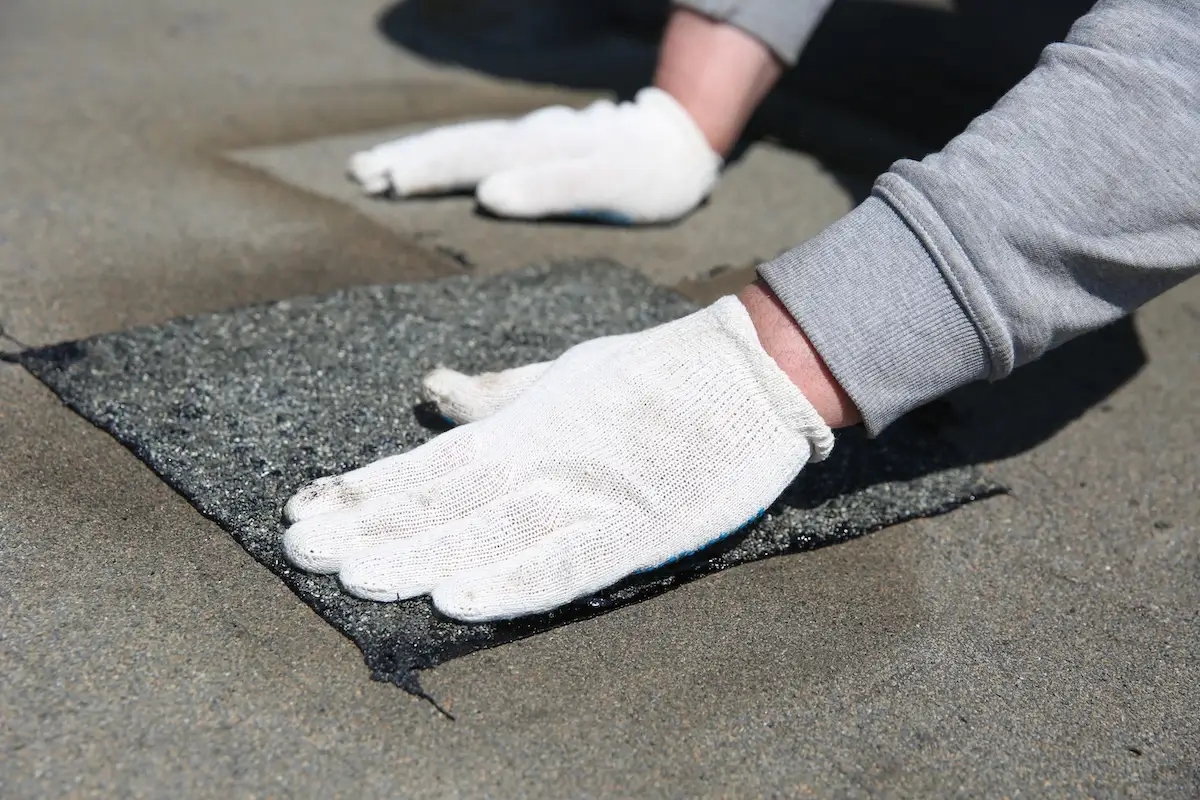
Commercial Roof Leak Repair starts with roof evidence around Research Triangle Park lab and office schedules. We trace entry points, photograph the evidence, and keep temporary control separate from permanent repair decisions.
Storm Damage Roof Repair
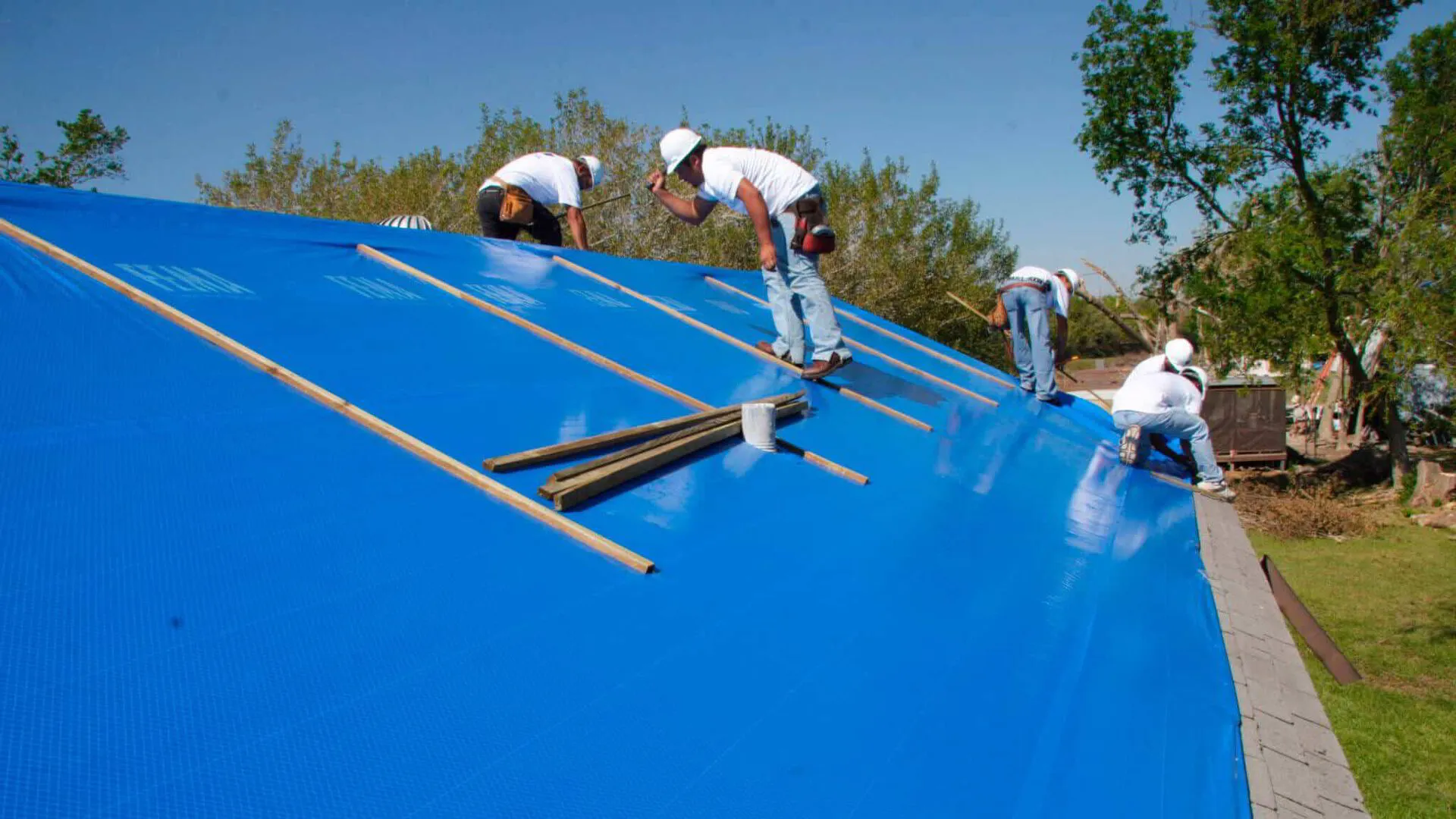
Storm Damage Roof Repair starts with roof evidence around humid Piedmont summers and quick freeze-thaw swings. We keep documentation tight enough for owners, facility directors, and insurance reviewers to understand what changed on the roof.
Emergency Roof Repair
Emergency Roof Repair starts with roof evidence around NC-147 and I-40 service-window planning. We trace entry points, photograph the evidence, and keep temporary control separate from permanent repair decisions.
Emergency Dry-In After Storms
Emergency Dry-In After Storms starts with roof evidence around NC-147 and I-40 service-window planning. We trace entry points, photograph the evidence, and keep temporary control separate from permanent repair decisions.
Wind attacks the edge, not the middle
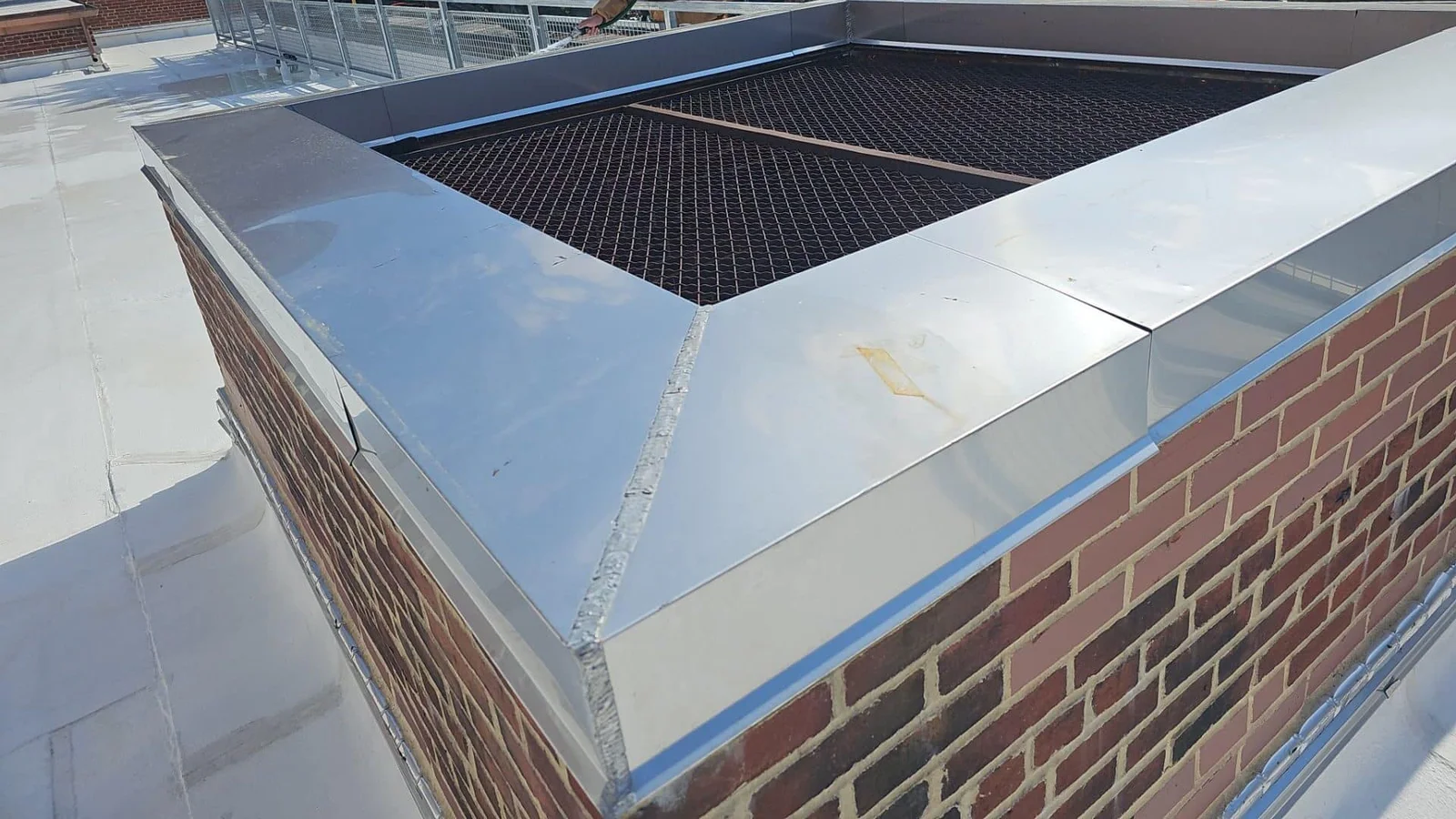
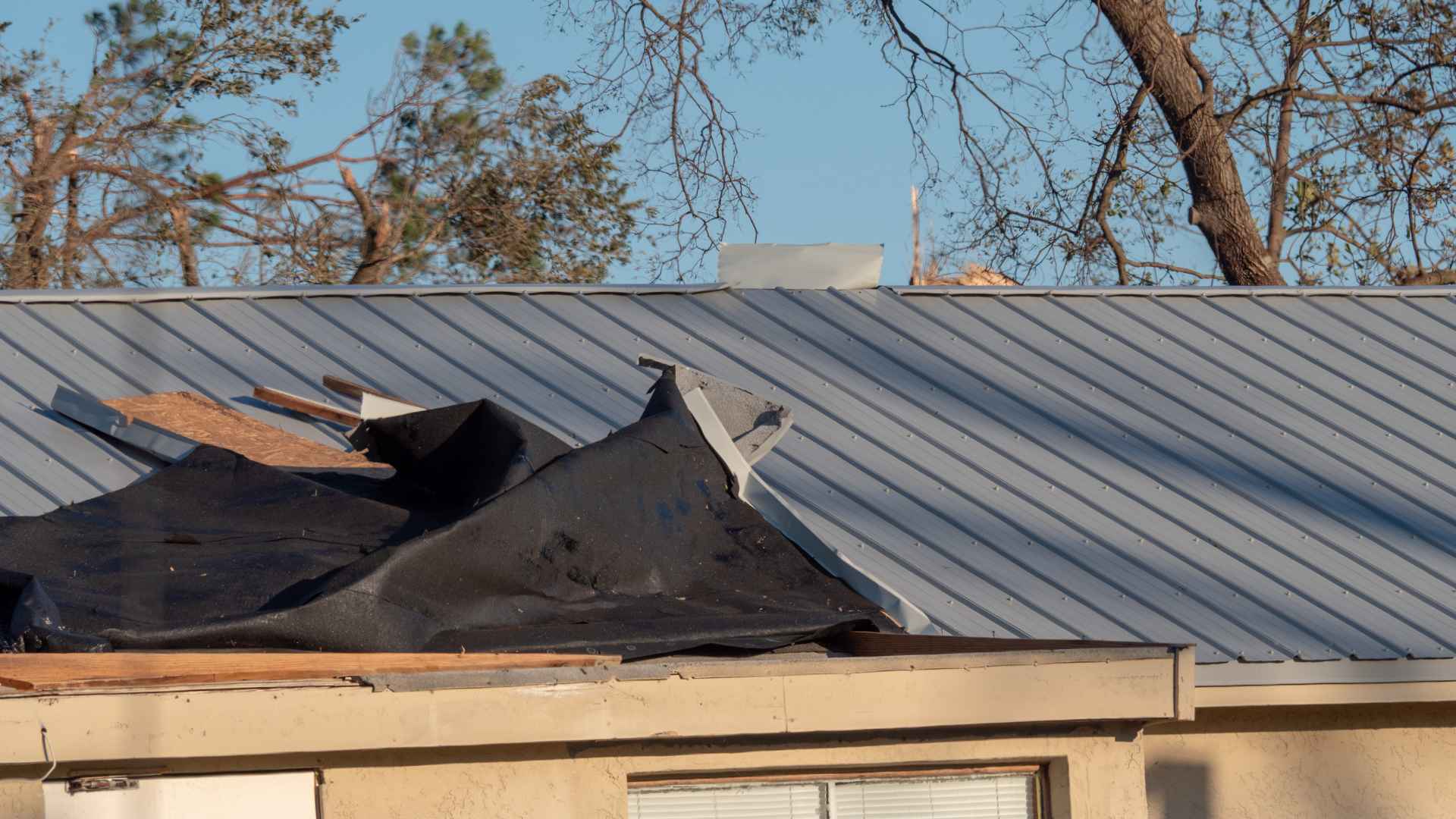
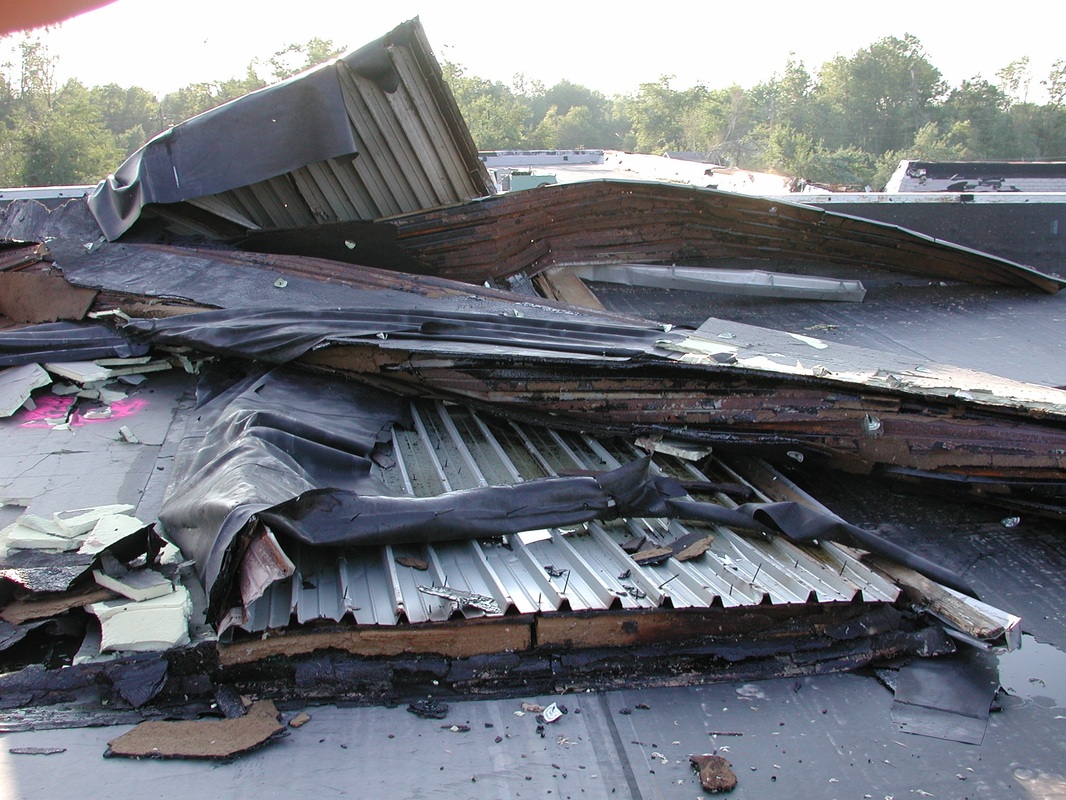
Most people picture wind peeling a roof up from the center. It almost never works that way. Wind pries a commercial roof loose from the edges and corners, where uplift pressure runs highest, and the first thing it grabs is the metal: the perimeter edge metal, the fascia, the coping caps along the parapet walls. Once a run of edge metal lets go it stops holding the membrane down, air gets under the sheet, and what started as a bent strip of metal becomes a peeled-back roof and an open building within a single storm. We repair wind-damaged edge metal and coping across Durham, and we treat the perimeter as the critical detail it really is.
Durham sits far enough inland to dodge coastal design winds, but it does not dodge wind. The remnants of hurricanes and tropical storms track up through the Piedmont most seasons and arrive as heavy rain and hard gusts, and ordinary spring and summer thunderstorms throw sharp downbursts on top of that. The distribution buildings along the I-85 and US-70 corridors, the tall-parapet retail boxes near Southpoint, and the campus buildings inside Research Triangle Park all present long perimeters and exposed edges for that wind to find and work loose.
Why the edge fails first
Edge metal does a job most people never think about: it anchors the membrane along the perimeter and forms the building's first defense against uplift. When a gust hits, the airflow accelerates over the parapet and around the corners, and the suction it creates tries to peel the edge metal up and off the wall. If the cleats are undersized, the fasteners have corroded or backed out, or the metal was face-nailed instead of properly cleated, the edge surrenders. The failure patterns we find after a Durham wind event:
- Coping caps lifted, rotated, or blown clean off parapet walls.
- Fascia and drip edge peeled back, dragging the membrane's perimeter attachment along with it.
- Loose, rattling edge metal where the continuous cleat has pulled free of the wall.
- Corroded or backed-out fasteners that let the metal work loose long before the storm that finally took it.
- Open joints between coping sections where wind-driven rain is now feeding straight into the wall assembly.
ANSI/SPRI ES-1 is the standard that governs this work
Edge securement is not a matter of judgment by eye. The ES-1 standard, developed by SPRI and pulled into the building code, sets the wind-resistance requirements for roof edge metal and coping, and it is the benchmark we build to. When we repair or replace a failed edge, we are not just bending new metal to copy the old profile; we are re-establishing an edge system designed and fastened to resist the uplift pressures the code requires for this building, at this height, in this wind exposure. In practice that means a continuous cleat anchored at the correct spacing, properly sized fasteners driven into sound substrate, and coping joints detailed to stay shut under load. An edge that merely looks like the original but was never engineered to ES-1 will hand itself back to the next storm.
Re-anchoring after a wind event
Once the wind has passed, the visible bent metal is only part of the story. Edge metal that still looks attached may have had its cleat loosened or its fasteners worked free, leaving it one gust short of going. Our assessment after a storm covers the whole perimeter, not just the obvious damage:
- We walk the full edge and check every run of coping and fascia for movement, not only the sections that are visibly displaced.
- We test fastener pull and cleat engagement to find securement that is compromised but has not failed yet.
- We open suspect areas to see whether wind-driven rain has already wet the insulation behind the failed edge.
- We re-anchor to ES-1 requirements rather than simply re-nailing whatever was there.
That last point is where re-anchoring earns its keep. Re-fastening a failed edge back to its original, inadequate detail just resets the clock on the next failure. Bringing it up to current securement requirements is what actually fixes it.
Stopping water before it spreads
A wind-opened edge is also an open door for water, and around Durham the wind almost always shows up with rain behind it. When edge metal lifts mid-storm, wind-driven rain drives into the wall assembly and under the membrane perimeter, and saturated insulation and a corroding deck are the slow, expensive aftermath. On an active failure we dry-in and temporarily secure the edge to stop the water entry, then come back for the permanent ES-1 repair once the building is protected and the forecast allows open work. Getting the perimeter closed fast is what keeps an edge-metal repair from growing into an insulation and deck replacement.
New metal that matches the roof it protects
Edge metal is not a generic part off a shelf. The profile, the gauge, and the finish have to suit the parapet height, the membrane type, and the look of the building, and a coping cap sized for a six-inch wall will not serve a wide, capped parapet. When we fabricate replacement metal for a Durham roof, we match the existing profile where it is sound and upgrade the securement underneath it, so the repaired run reads as part of the original edge rather than a patch. On membrane roofs we make sure the new edge ties into the sheet's perimeter termination, because the metal and the membrane have to act as one system at the edge or the wind will find the seam between them. Matching the metal matters for the warranty too: a manufacturer-approved edge detail keeps the membrane warranty intact, where a mismatched field-bent fix can void it.
Working around occupied Durham buildings
Most of these roofs sit on buildings that stay open through the repair. A healthcare facility cannot lose access, a research building in RTP carries sensitive interiors and rooftop equipment, and a retail center near Southpoint has customers and loading traffic moving directly below the edge we are working on. We plan perimeter work around those realities: staging that keeps falling-object zones clear of entrances, scheduling that respects tenant operations, and sequencing that keeps the building closed to weather while the work proceeds.
Documentation for the claim and the file
Wind damage to edge metal is frequently an insurance matter, and the documentation has to support that. We provide photo-located records of the failed and re-anchored conditions, notes on what was found along the perimeter, the repair limits, and the securement detail we built to. On claim-related work we document what we observe as the contractor without acting as a public adjuster or promising an outcome. If a storm has lifted coping or peeled back the edge metal on a Durham commercial roof, call us. We will secure it against further water entry first, then put the perimeter back to a standard that holds through the next one.